
Flying a Drone in Malta
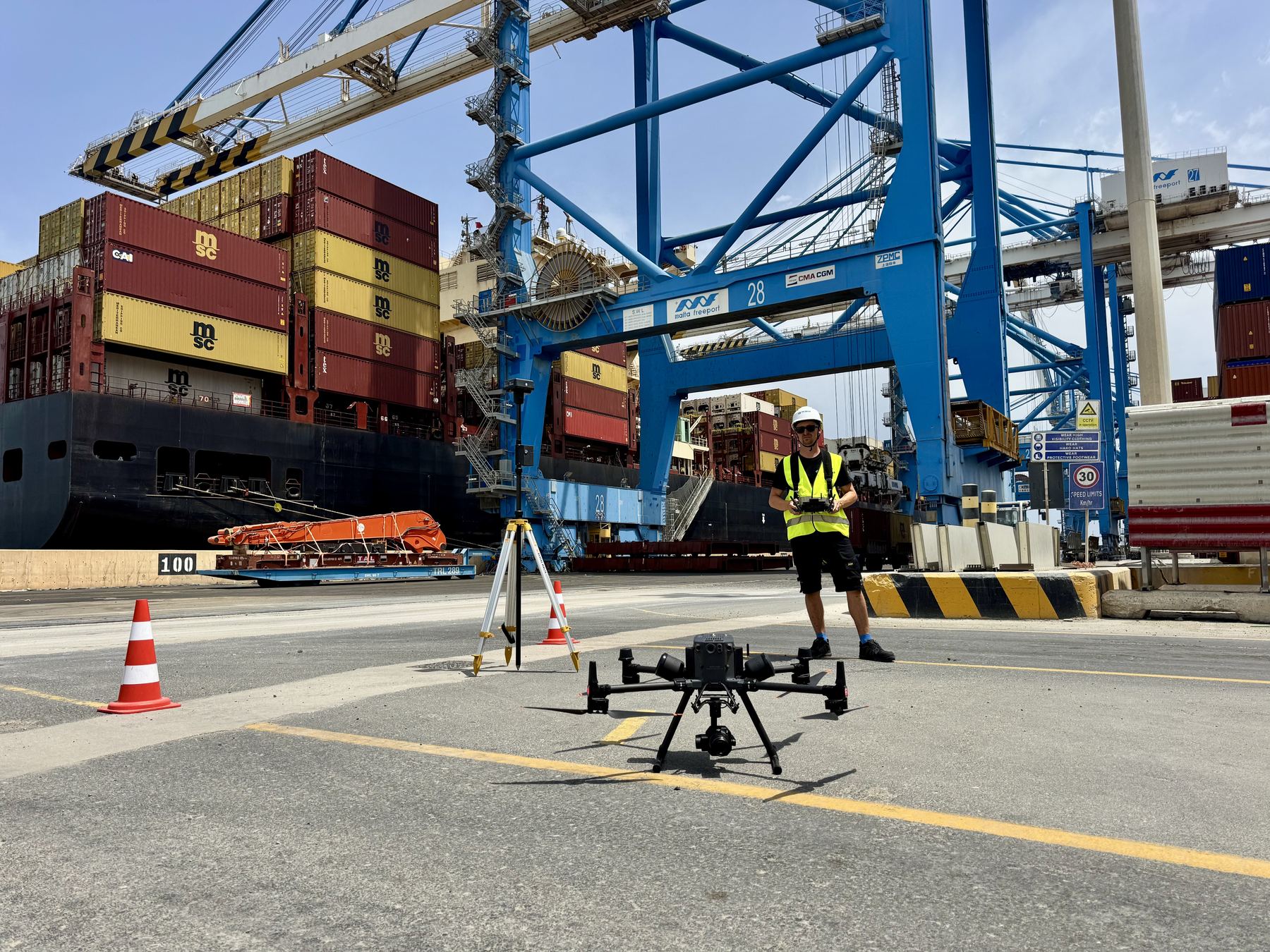
Buying a drone from us has no restrictions. Flying one does, and in Malta the rules are stricter than in most of Europe: all of Malta is controlled airspace, so every single flight needs permission from Transport Malta, whatever the drone weighs and whether you fly for fun or for work.
The good news: once you are set up, asking for permission takes a minute and most requests are approved automatically.
Before you fly: what every drone owner in Malta needs
| What | Who needs it | How | Cost |
|---|---|---|---|
| 1. Third-party insurance | Everyone, every drone, hobby or work | Any insurer will do; most of our customers use Coverdrone (see below). You need it first: the registration asks for it | Set by the insurer |
| 2. Register as a drone operator | Everyone whose drone has a camera, which is every drone we sell, whatever its weight | Online at tmcad.idronect.com (Transport Malta) | €25 a year |
| 3. Your number on the drone | Everyone registered | Print your operator number or its QR code and stick it on each drone | Free |
| 4. A pilot certificate | Drones over 250 g (see the next table) | Sit Transport Malta's exam in Lija, or take the course and exam online with another EU country's approved provider, often within a few hours (see below) | Set by the provider |
| 5. Permission for each flight | Everyone, every flight | Request it at tmcad.idronect.com: date, time, place, height. Low-risk requests are approved automatically in minutes | Free |
Insurance: why, and where

In Malta, third-party insurance is compulsory for every drone, and cover for loss, crashes and damage to others is worth having anyway. Coverdrone, the leading drone insurer and the one most of our customers use, quotes and covers you within minutes: third-party or comprehensive, hobby or work, even month by month.
Police can check. Law enforcement officers may ask to see your registration, the number on your drone and your flight authorisation, and breaches carry a penalty.
What depends on your drone
Look for the class label (C0 to C4) on the drone or its box. No label? Go by weight, and if it is over 250 g, follow the last column.
| Under 250 g (class C0) | Under 900 g (class C1) | Under 4 kg (class C2) | Under 25 kg (C3, C4, or over 250 g with no label) | |
|---|---|---|---|---|
| Pilot certificate | None. Read the manual | A1/A3 certificate | A1/A3, plus A2 to fly near people | A1/A3 certificate |
| Near people | May fly over people, never over crowds | Avoid flying over people, never over crowds | Never over people; keep 30 m away (5 m in low-speed mode) | Keep 150 m from people and built-up areas |
| Remote ID | Not required | Must be switched on | Must be switched on | On for C3; not required for C4 |
Rules for every flight
| Rule | In short |
|---|---|
| Height | Never above 120 m. Your Transport Malta authorisation may set a lower limit: follow it |
| Keep it in sight | Always within your own line of sight. Flying with goggles (FPV) needs a second person watching the drone |
| Daylight | Automatic approval covers flights from half an hour before sunrise to half an hour after sunset. Other flights may need a risk assessment |
| No-fly zones | Airports, heliports, embassies, hospitals, power stations, prisons and nature reserves are restricted. The map at tmcad.idronect.com shows them and who to ask for a "no objection" |
| Aircraft first | Manned aircraft always have priority |
| Minimum age | 16 for most drones (EU rule; a country may lower it to 12). No minimum for a toy |
| Privacy and property | Permission to fly is not permission to film people or property, or to take off from private land without the owner's say-so. Data protection law applies to what you record |
The pilot certificates, explained
- A1/A3 ("proof of completion of online training"): for drones over 250 g. Study Transport Malta's presentation and videos, book an exam at tmcad.idronect.com, and sit it at Transport Malta's office in Lija: 40 multiple-choice questions, one hour, 75% to pass. Renewed every five years.
- A2 ("certificate of competency"): for class C2 drones flown near people. You need A1/A3 first, then declare some practical self-training and pass a second exam in Lija: 30 questions, 45 minutes, 75% to pass.
- The quicker route: online, from another EU country. Training done in one EU country is recognised in all the others (EASA), so you can also take the course and exam online with another EU country's aviation authority, or a training provider it has approved, often within a few hours. Check the provider is recognised by an EU aviation authority before you pay.
Flying for work
Weddings, events, concerts and other paid jobs follow the same steps, plus a letter of engagement and a "no objection" from the venue uploaded with the flight request. Valletta has its own special permit zone with extra requirements. Anything riskier than the open category (the rules above) needs an operational authorisation from Transport Malta.
Visiting Malta with a drone
You still register at tmcad.idronect.com and upload valid third-party insurance. If you already hold an EU operator registration from another country, a three-month Maltese registration costs €10; otherwise it is the full €25. You need the pilot certificate your drone requires, and a flight authorisation for every flight, like everyone else.
Sources
Everything above comes from these pages, read on 24 September 2026. Rules change: if anything here differs from what they say now, follow Transport Malta and EASA. We are a shop, not a regulator, and we cannot take responsibility for a rule that has changed since we last checked.
Transport Malta, Civil Aviation Directorate
- Drones: Information and Help (registration, insurance, flight authorisation, pilot licensing)
- Drones: Registration
- Drones: Training (A1/A3 and A2 exams)
- Drones: Open Category, recreational and commercial operations
- Drones: Tourists visiting Malta
- Drones: Geographical zones
- Drones: Remote identification
- Regulatory Instrument 006/2024 V2 (Malta's requirements for registration and flight authorisation)
- tmcad.idronect.com: Transport Malta's drone portal, for registration, exams and flight requests
EASA, the European Union Aviation Safety Agency
- Open category: low-risk civil drones (drone classes, subcategories, distances, minimum age)
- Drones: frequently asked questions
- Is the "open" category certificate recognised throughout Europe? ("Yes, training conducted in one EASA member state will be recognised in all others.")
- Regulation (EU) 2019/947, the EU rules for operating drones
Questions? Ask us at the counter or ring us. We fly these every day.